
C R E M O R N E T O W N H O U S E
Cremorne Town House
Cremorne, Melbourne, Victoria
Wurundjeri Woi-wurrung Land
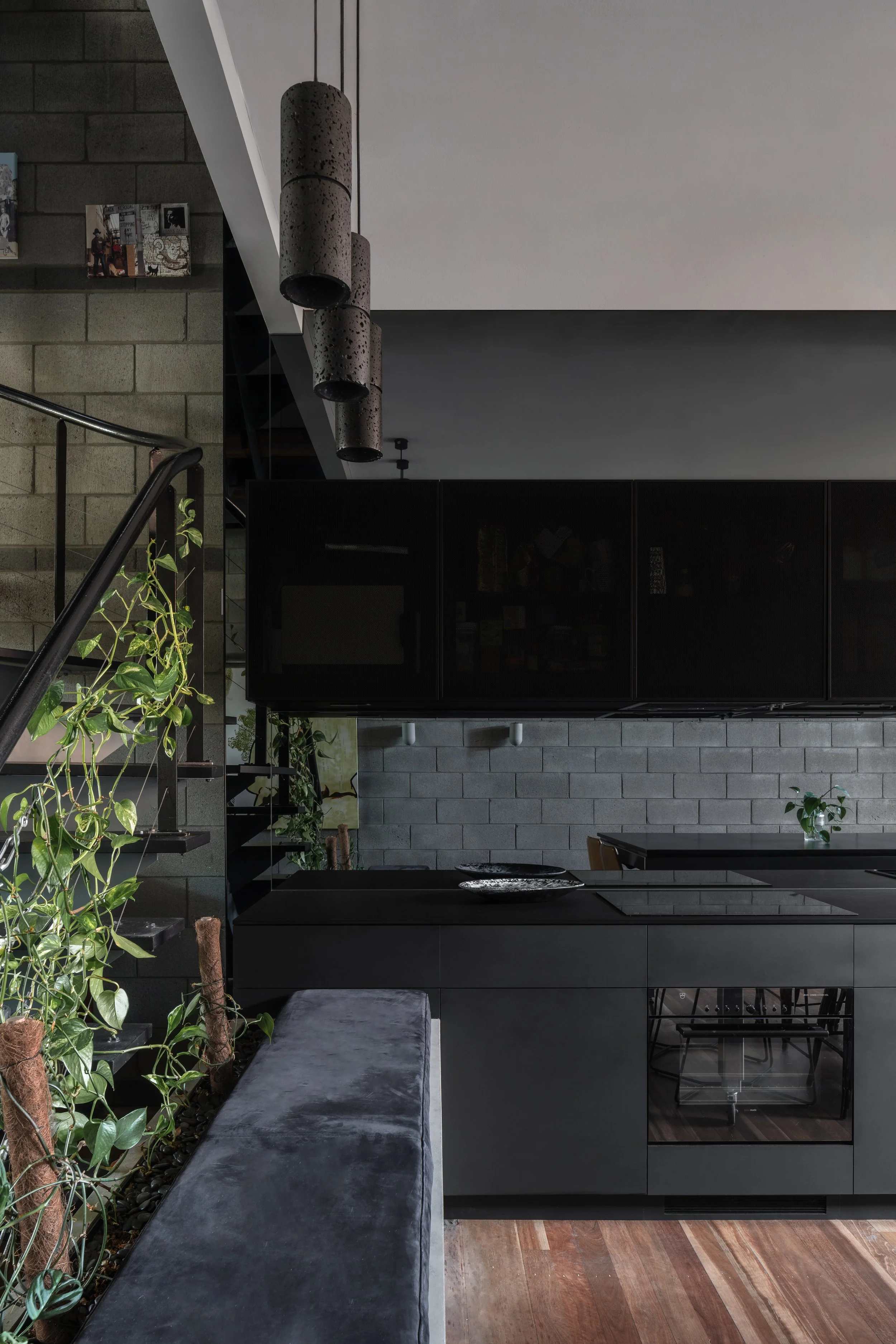
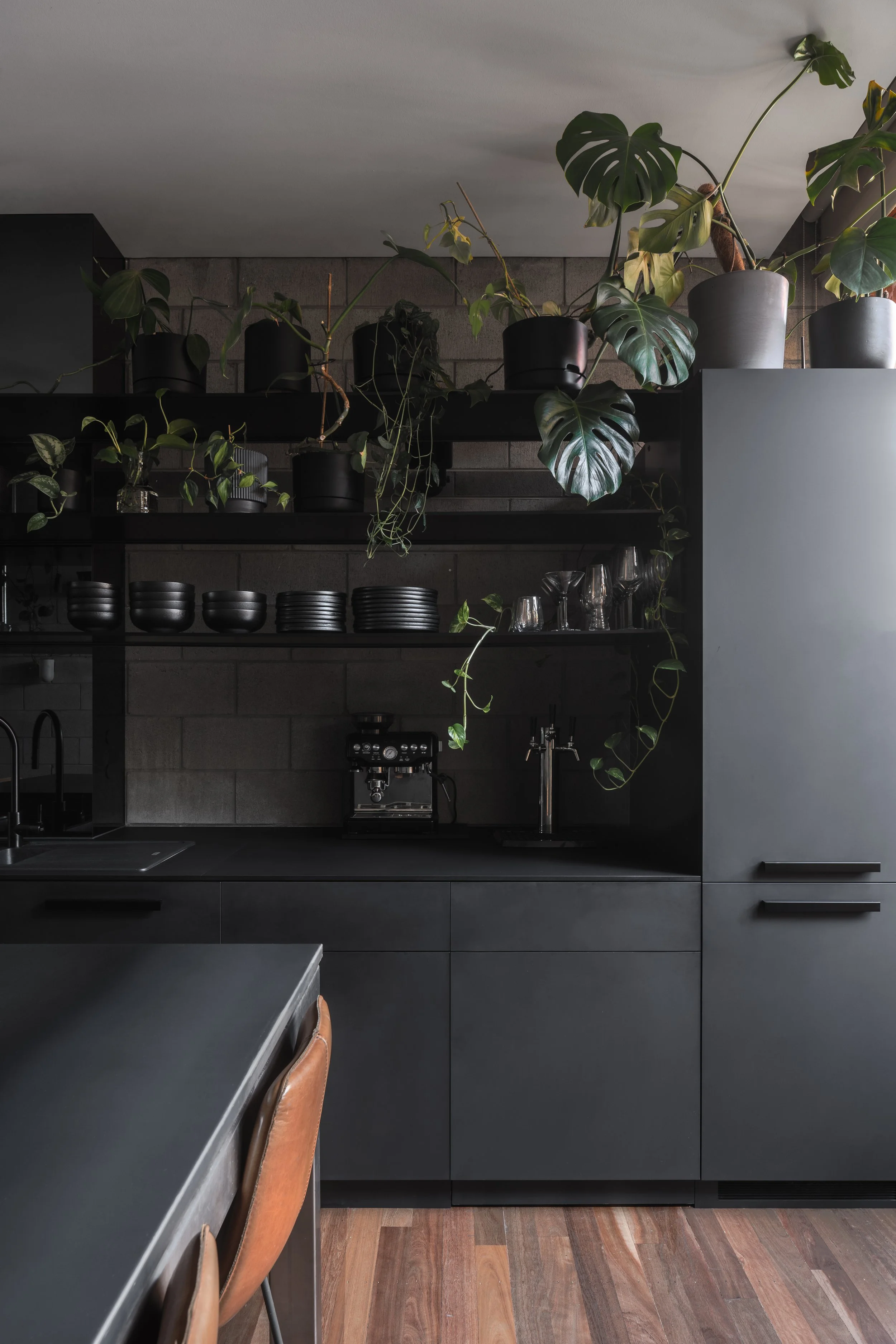
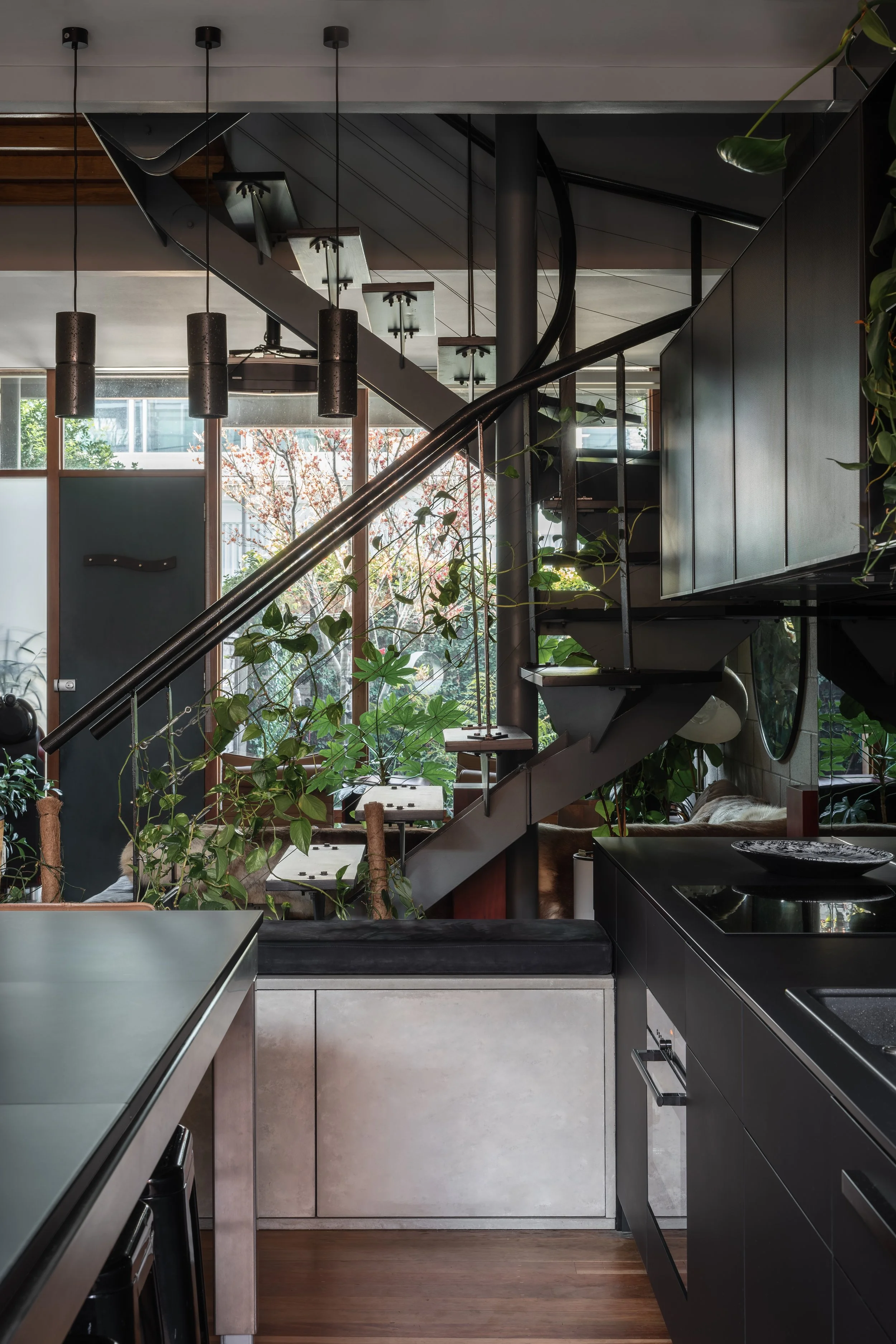
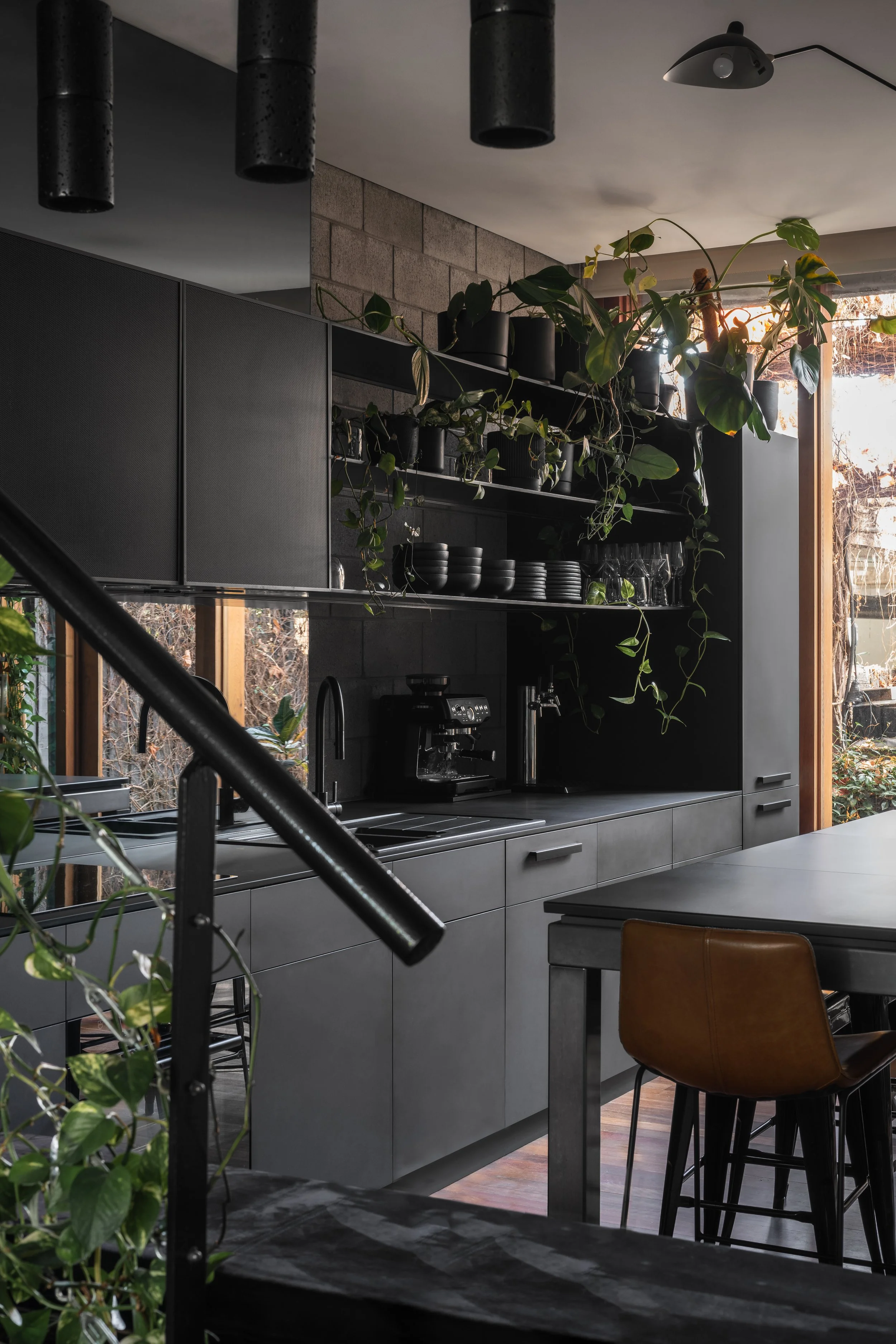
The Cremorne Street Townhouse represents a series of interior interventions that highlight materiality and craftsmanship. The project involved reprogramming two existing spaces, a ground-floor kitchen and a first-floor bathroom, alongside the addition of a new ensuite on the second floor. Between these spaces, the project aimed to create atmosphere by revealing existing materials and using new textures to give the illusion of space within a confined footprint.
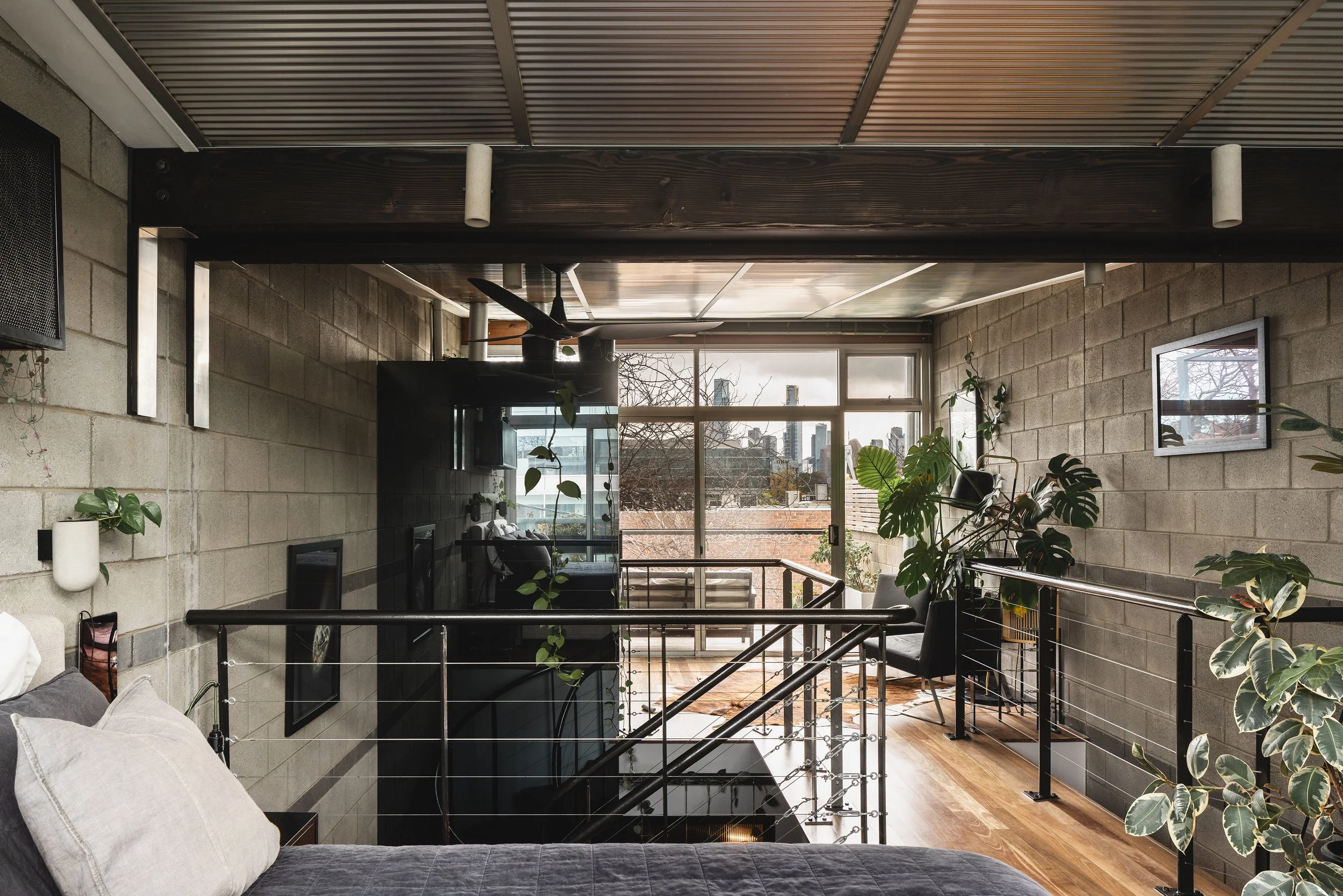
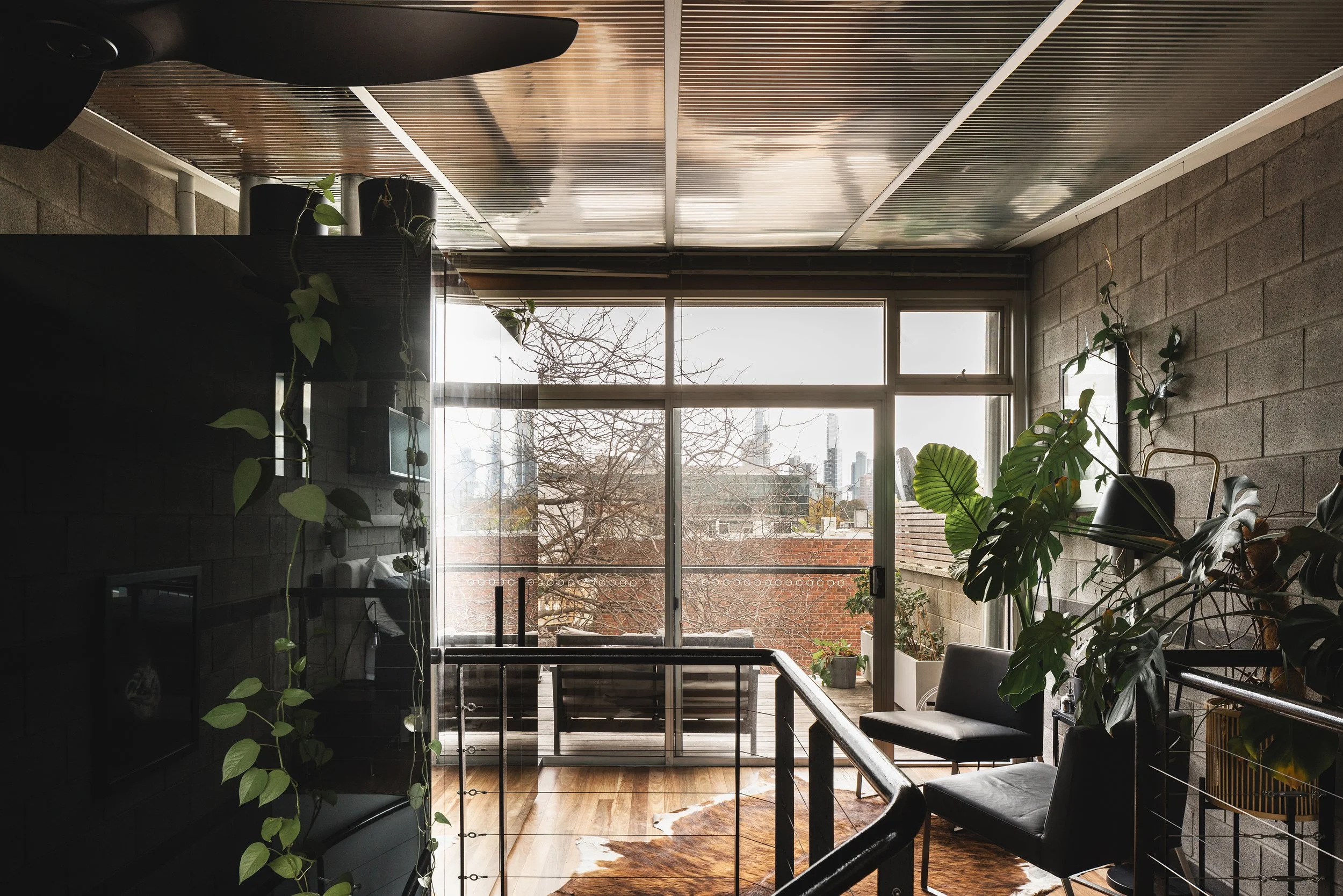
The existing townhouse, which used inexpensive materials to minimise cost, was designed by architect Craig A Rossetti and was awarded the Robyn Boyd Award in 1995 for Best Residential Housing. With no requirement for any external work, the project was a series of delicate interior interventions to create additional space and improve the amenity of the existing house.
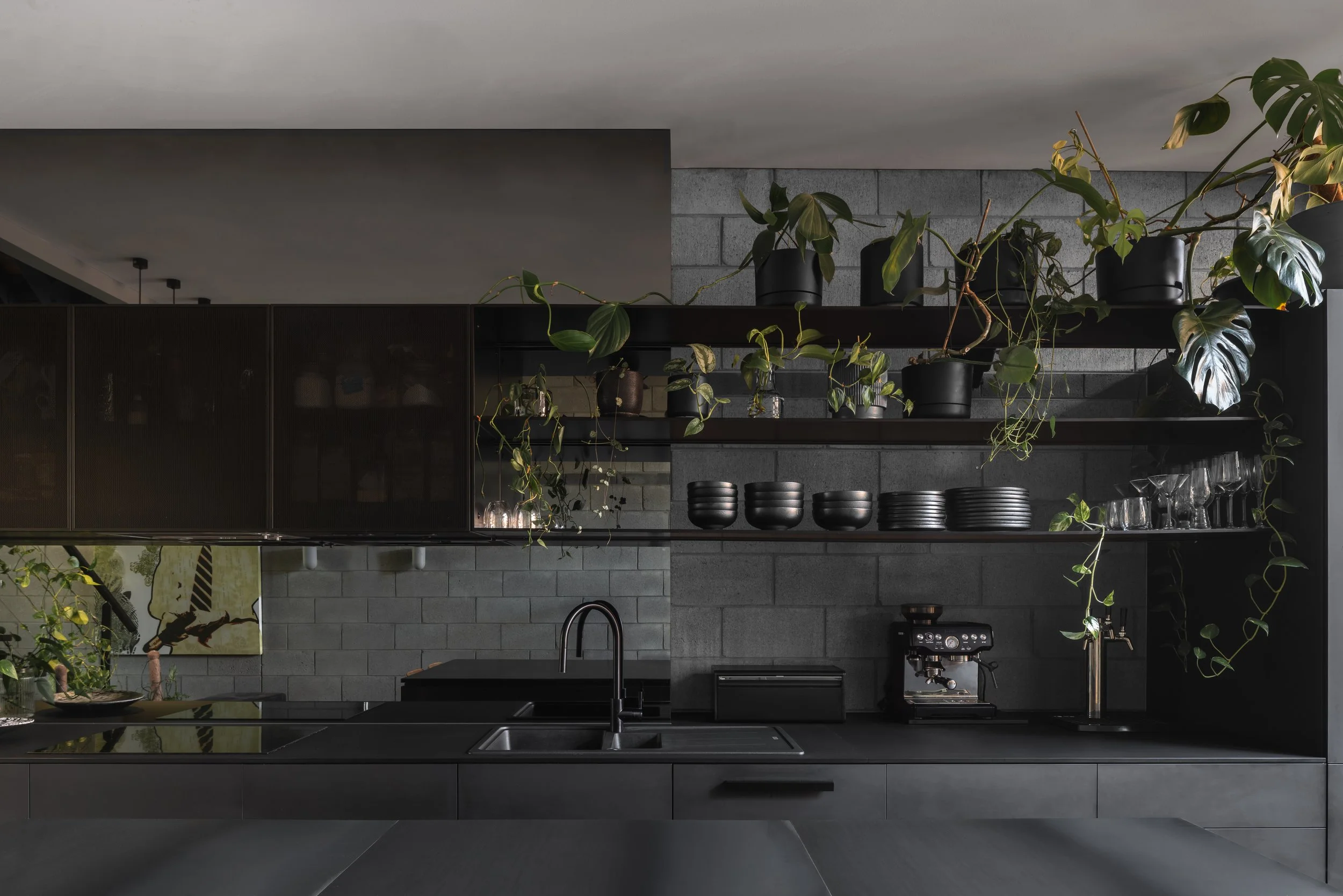
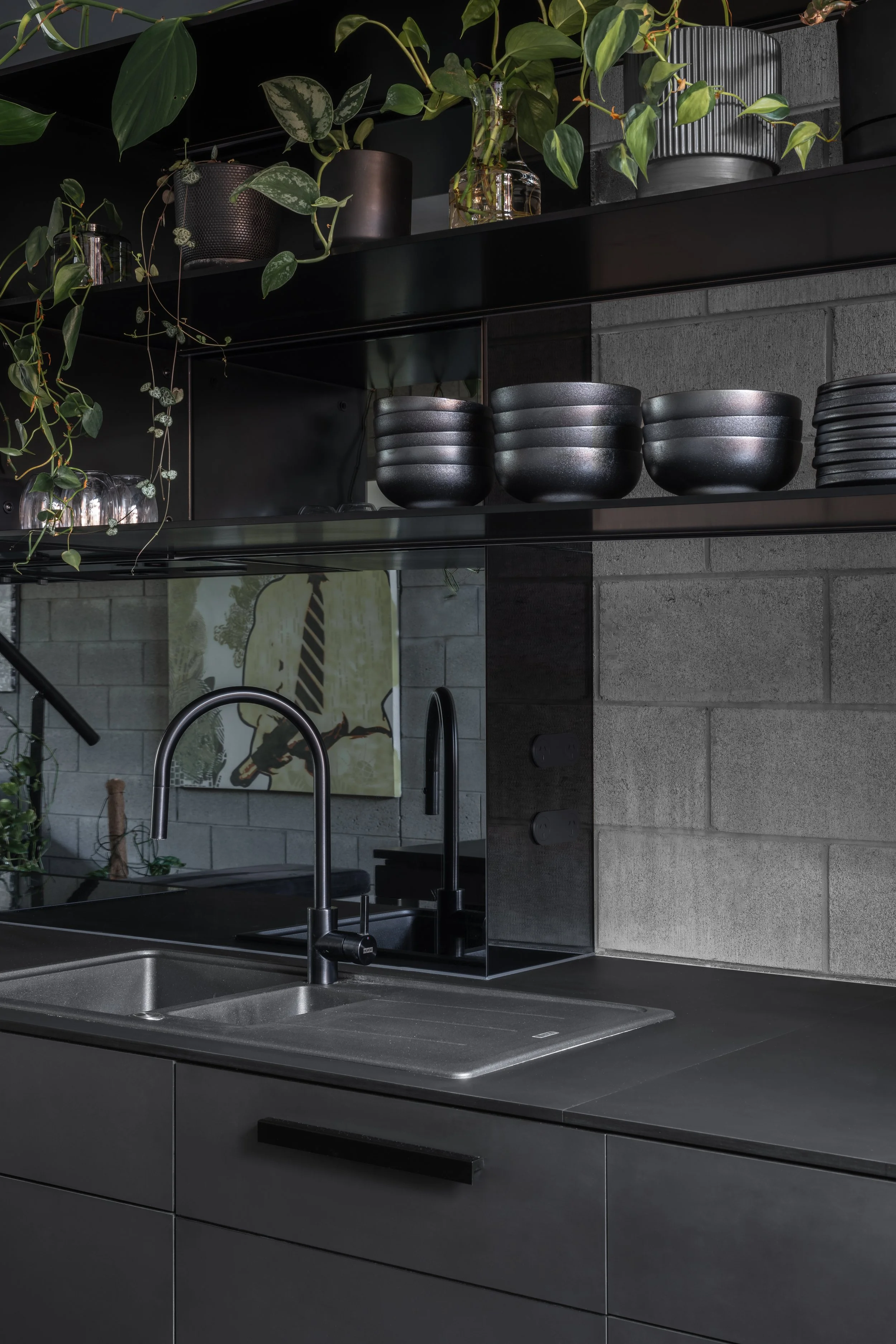
On the ground floor, demolition of an existing dividing wall between the living room and the kitchen helped to create an expansive, open space to give views through to the rear garden from the entry. Beyond the living area, the design of the new kitchen was organised around the central dining table as the spatial device of the room. The clients had a desire for formality within the kitchen, where the central dining table had qualities of a restaurant or wine bar. Both a keen cook and home-beer brewer, the dining table became a stage for them to entertain, gather, prepare food and play pool.
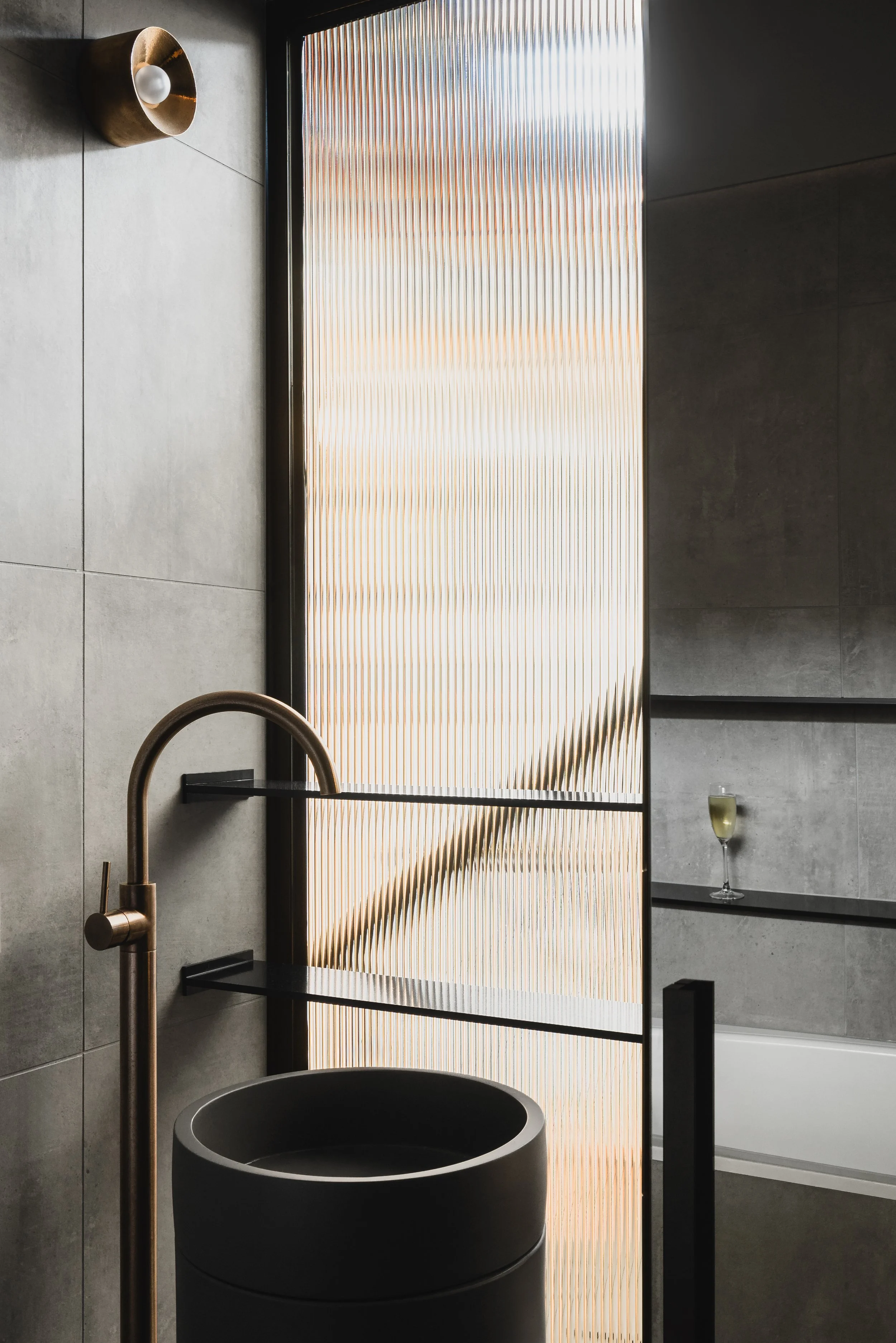
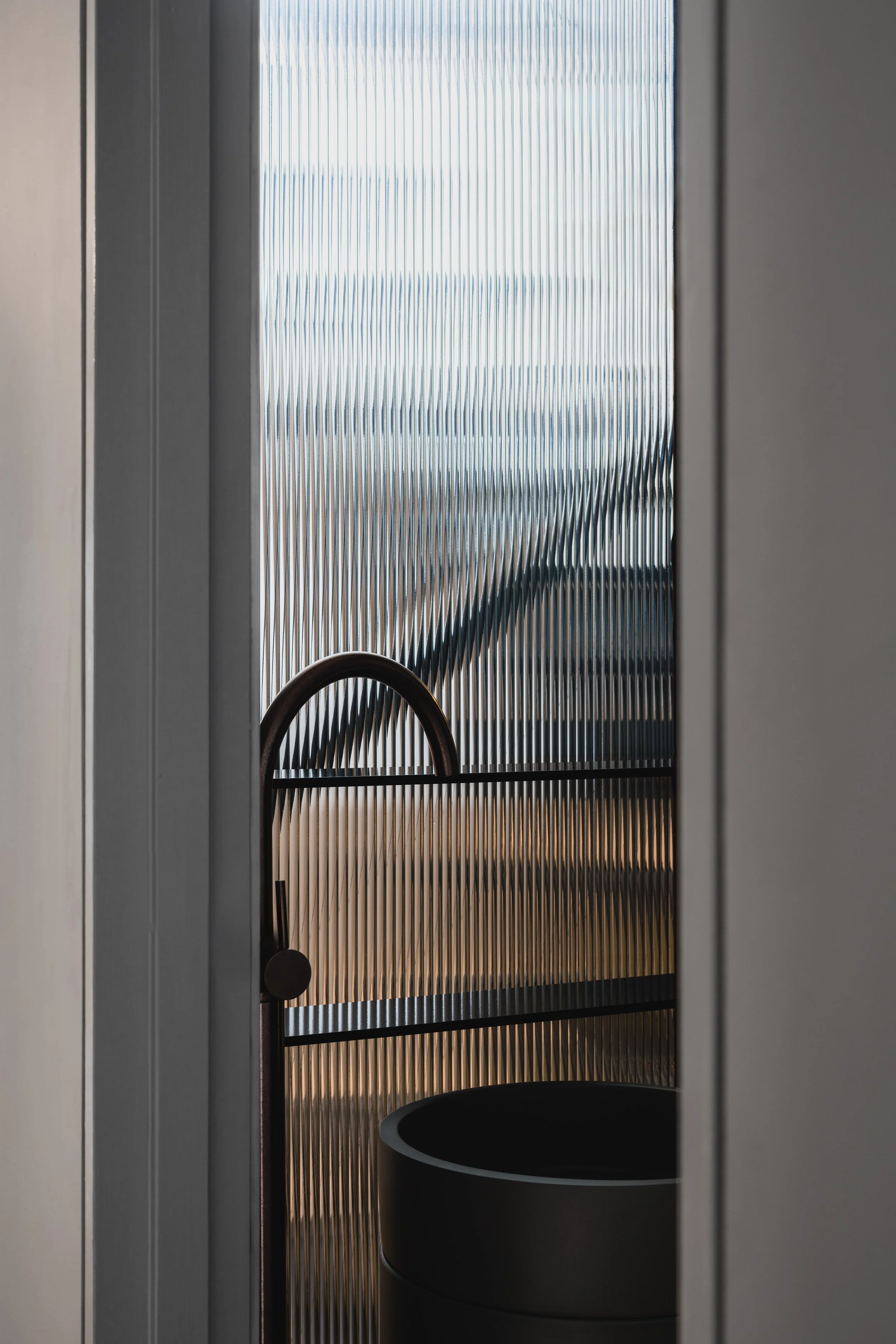
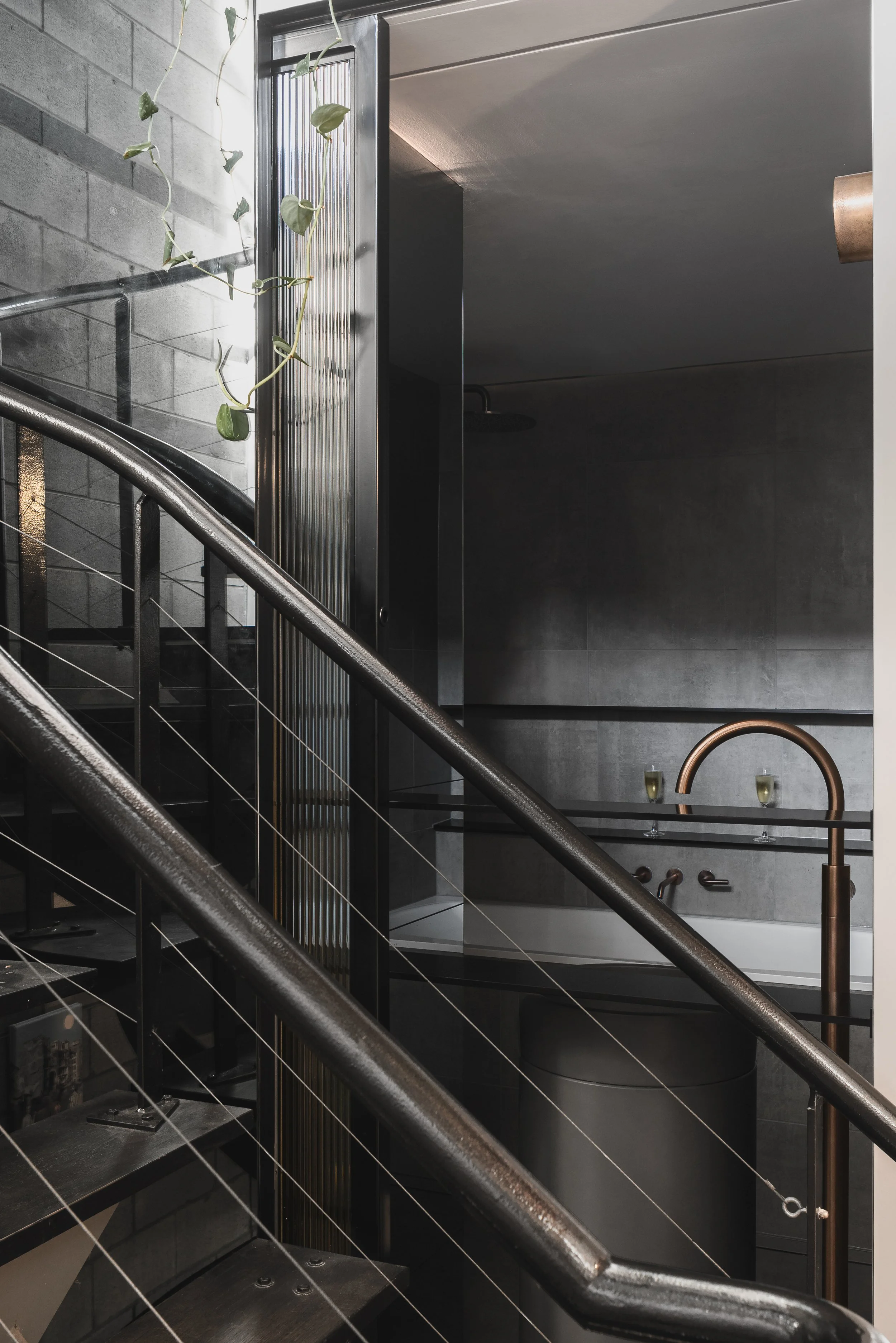
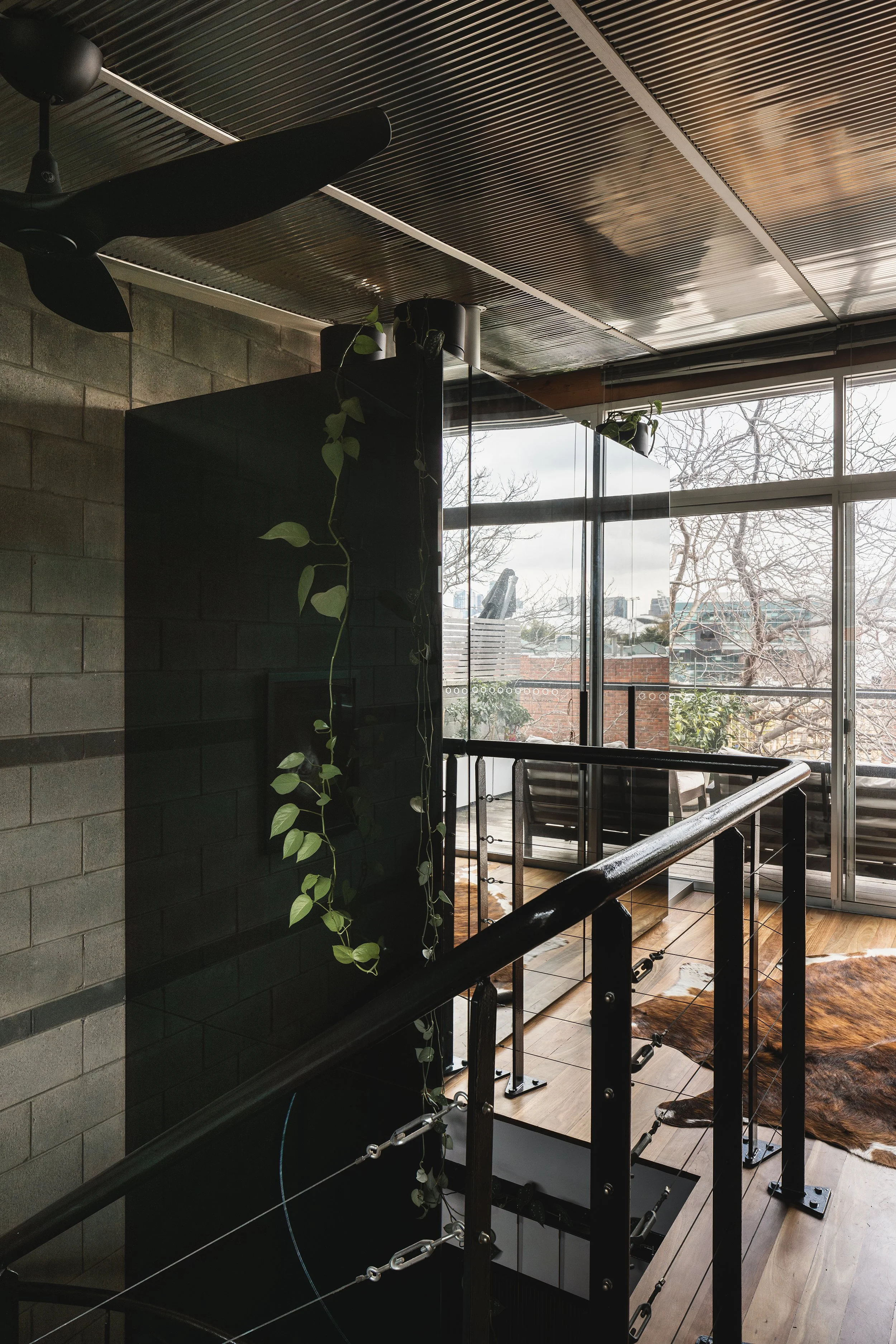
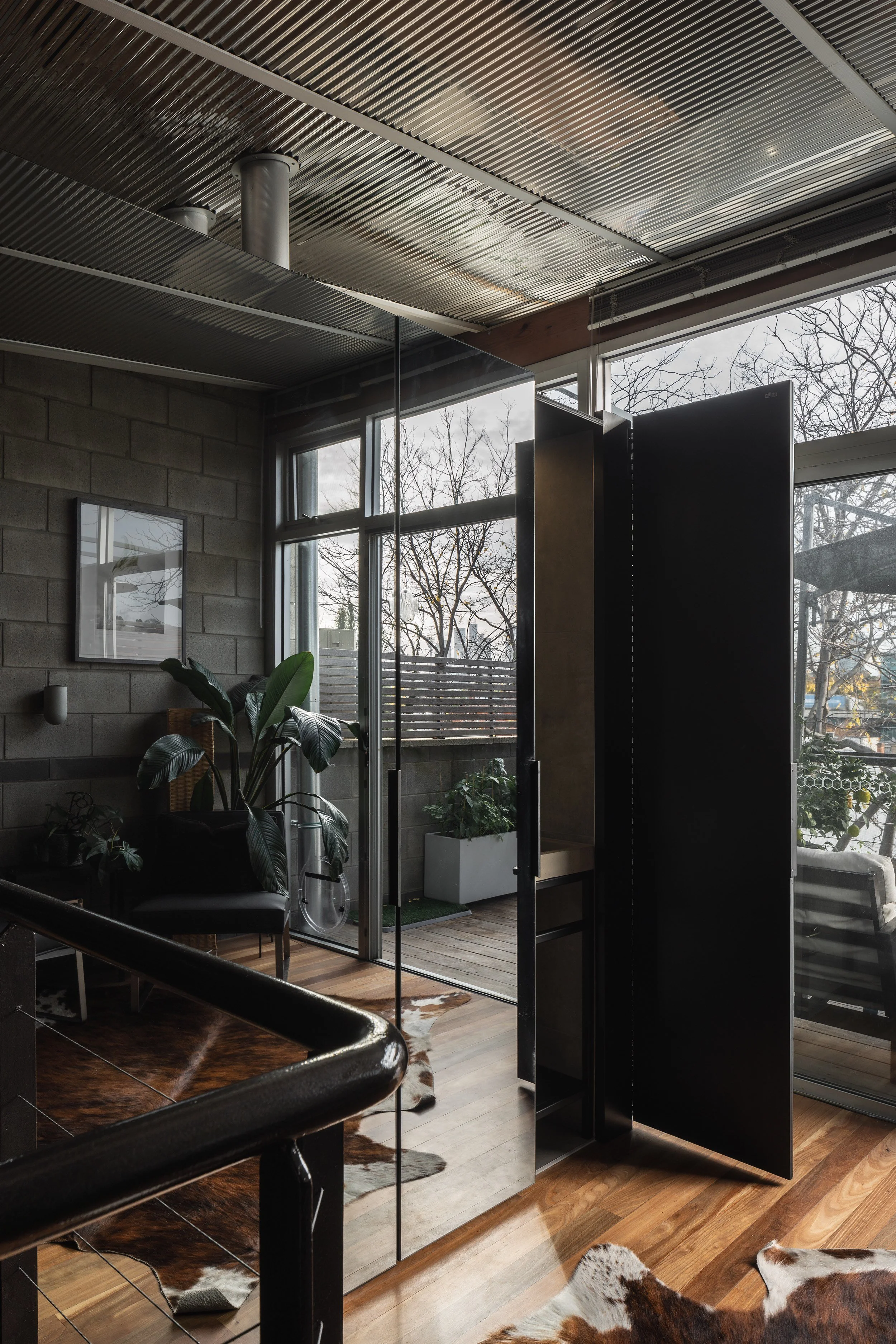
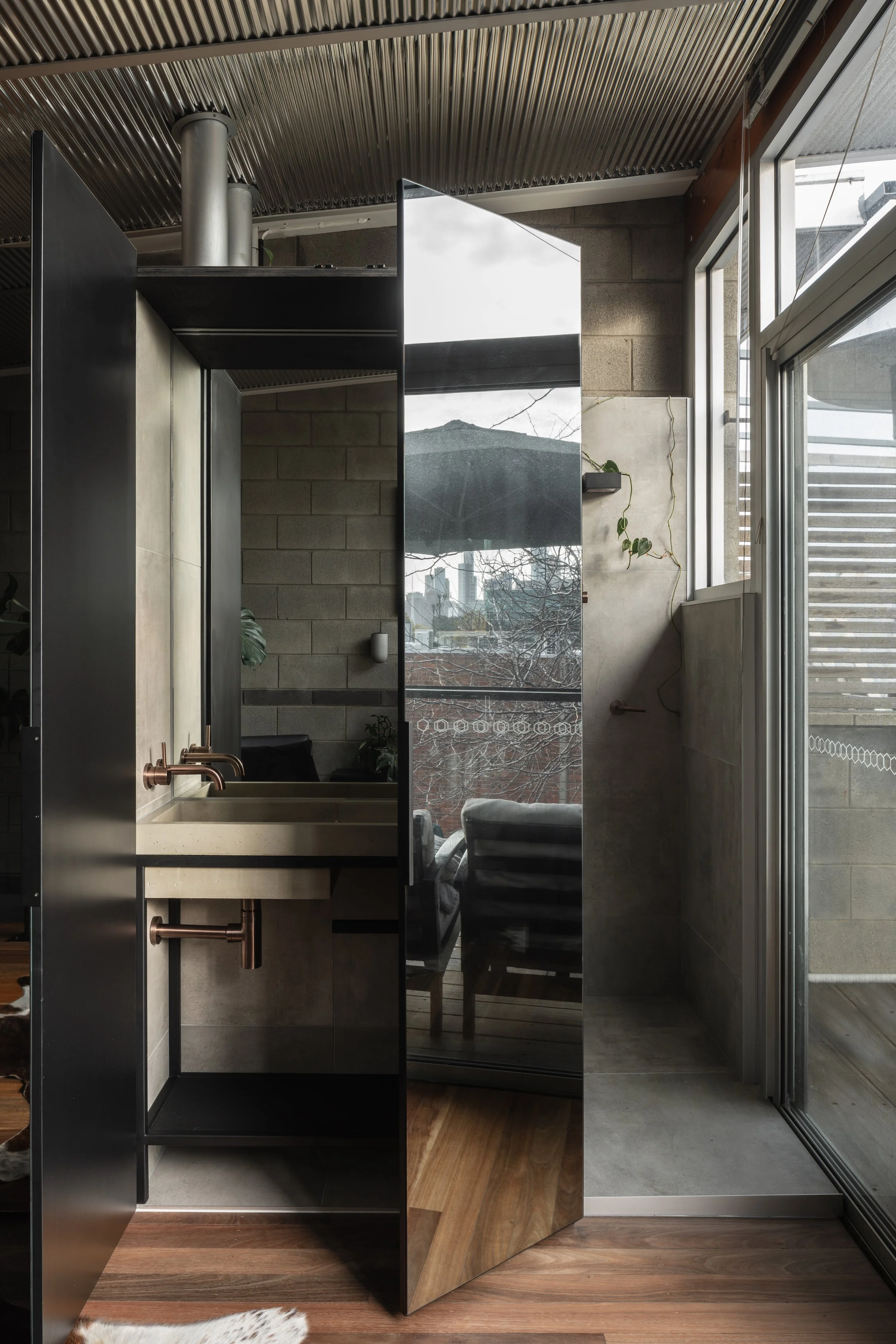
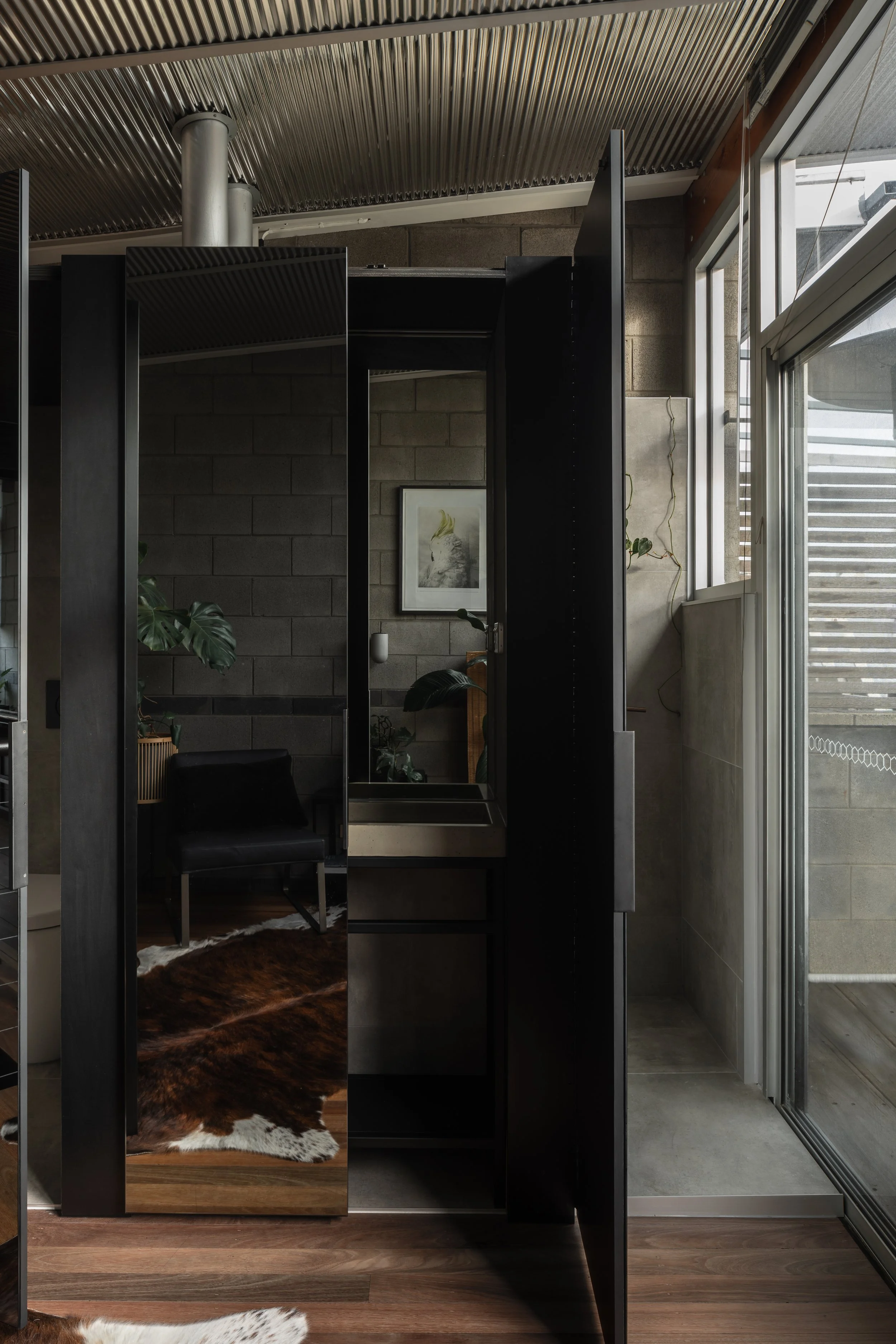
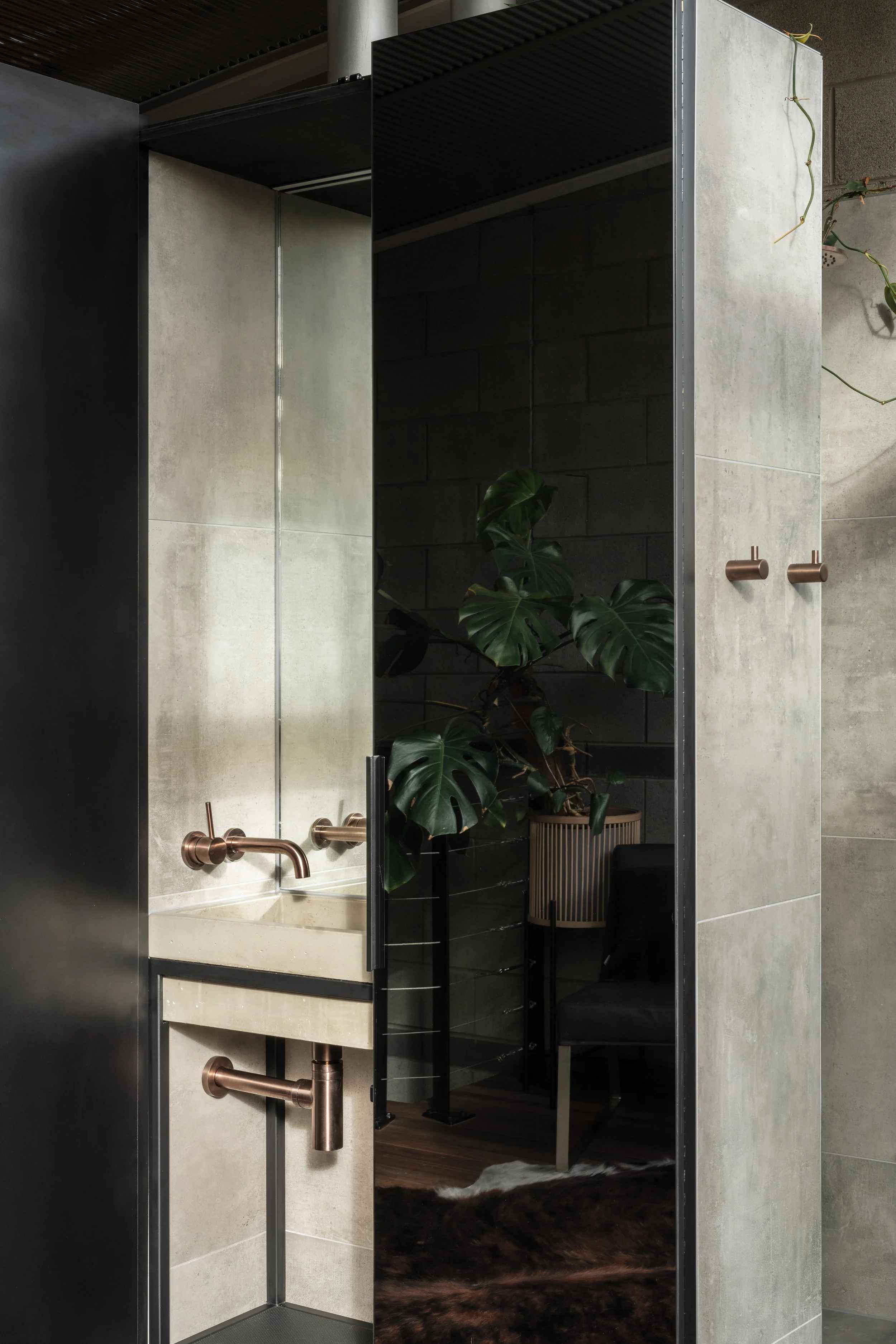
In collaboration with Joiner Valentin Tinc, the first floor ensuite was treated as both a functional space and a piece of furniture sitting as an independent object within the space. Lined in black mirror, the walls expanded the perception of space by reflecting the surrounding volume and light from the balcony. Concealed within lies a functioning bathroom of stone and concrete, with toilet and vanity to one side, and a shower to the other that captures views of the city.
Due to the restricted budget, the project was confined to the existing footprint and emphasised the quality of materials and objects within the space. The mirrors are a continuous folding plane that flow from the top floor to the ground, tying together the architectural elements that were once separate. In addition, the existing blockwork and spotted gum flooring were stripped back to their original state, bringing a rawness to the refined dark interior palette of dark stone and metal tapware.
Project Team
Jean Graham, Cara Rodrigues, James Embry, Helen Pallot, Issa El Assaad and Richard Austin
Stuctural Engineer
Builder
Richard Tucker and John Tamowicz
Joiner
Valentin Tinc
Film & Photography
Awards
2025 Grand Designs Australia House of the Year Awards2025 Habitus Magazine Issue No. 622025 Simple Dwelling 2025 Dezeen Awards2024 Simple Dwelling - How This Architect Elevates Everyday Living into Luxury in this Townhouse2024 Shortlist - Sustainability Awards2024 Australian Interior Design Awards - Gallery Residential Design2023 ArchiTeam Awards - Small Project Medals and AwardsPublications
2026 Grand Designs Australia House of the Year Awards2025 Habitus Magazine2025 Simple Dwelling 2025 Dezeen Awards2024 Simple Dwelling - How This Architect Elevates Everyday Living into Luxury in this Townhouse2024 Shortlist - Sustainability Awards2024 Australian Interior Design Awards - Gallery Residential Design2023 ArchiTeam Awards - Small Project Medals and Awards2023 - Winter Architecture - Film